5 idioms

Caribbean French idioms and expressions

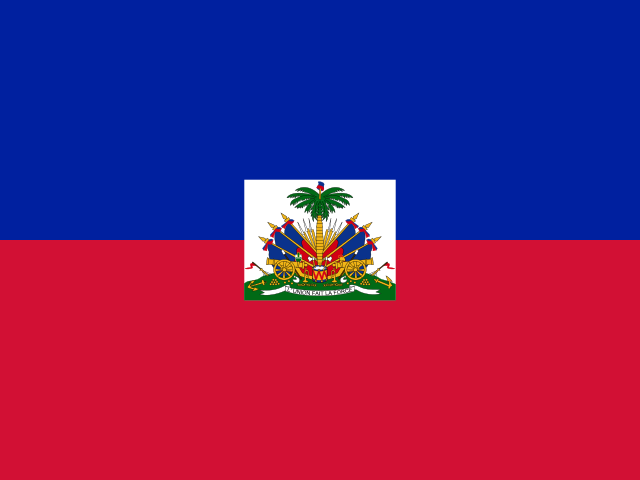
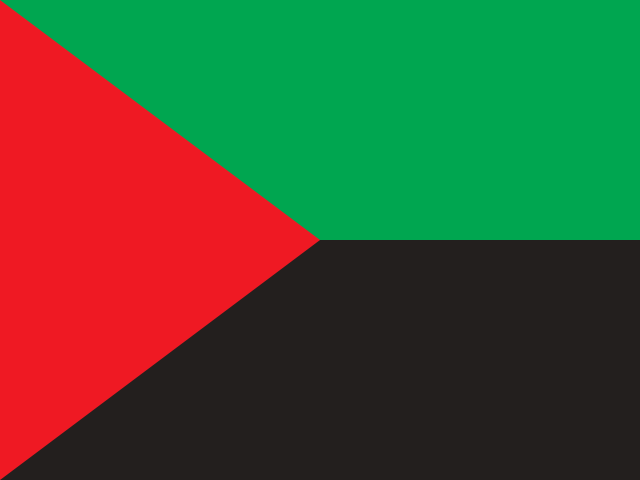
Saint-Domingue rose in 1791 and became Haiti in 1804, the first country to throw off France and the only one ever born of a successful slave revolt. Martinique, Guadeloupe and French Guiana (on the South American mainland, but Caribbean in every other sense) stayed, and have been French départements since 1946. Everywhere here the everyday language is Creole, built from seventeenth-century French words on a grammar of its own, while French belongs to school and the courtroom. Haiti made Creole official alongside French in 1987. Fewer than one Haitian in ten speaks French fluently. So the idioms travel. Haiti's derrière les montagnes, il y a des montagnes is the proverb dèyè mòn gen mòn in its Sunday clothes, and canari, in the Antillean entries below, is the everyday word for a cooking pot from Fort-de-France to Pointe-à-Pitre. The French comes with the Creole music still in it: softer r's, and a rhythm all its own.

Haiti

celui qui frappe oublie, celui qui porte la marque se souvient

the one who strikes forgets, the one who bears the mark remembers

the person who causes harm forgets it, but the victim never does

This Haitian proverb ('bay kou bliye, pote mak sonje' in Creole) warns that those who hurt others tend to move on, while the wounded carry the memory forever.
MartiniqueGuadeloupeFrench Guiana

chacun prépare sa propre mort

each person prepares their own death

each person makes their own drink to taste

This Antillean saying refers to the tradition of serving ti punch: the host provides rum, lime, and cane syrup, and each guest mixes their own glass to their liking.

GuadeloupeMartinique

chacun sait ce qui bout dans son canari

each person knows what boils in their canari (Creole word for cooking pot)

only you truly know your own business

This Antillean proverb means that nobody knows your situation better than you do, only you know what's really going on in your life.

Haiti

derrière les montagnes, il y a des montagnes

behind the mountains, there are mountains

after one challenge, another always follows

This Haitian proverb ('dèyè mòn gen mòn' in Creole) reflects the resilience of a people familiar with hardship: once you overcome one obstacle, expect another.

Haiti

un sac vide ne tient pas debout

an empty sack does not stand upright

you can't function without basic necessities

This Haitian proverb teaches that a person cannot work or think properly without food and basic resources, just as an empty sack cannot stand on its own.